
8.1 Evaluation of Compliance with Legal and Other Requirements (LORs)
Module 2 (Introduction to Energy Management) discussed about the importance of managing energy from three different perspectives: moral, economic and legal.
“The legal importance of energy management can be viewed from the perspective of legal compliance. In the Philippines, the enactment of RA 11285:2018 or the Energy Efficiency and Conservation (EEC) Act requires designated establishments to comply certain provisions. Penalties are imposed upon establishments found to be non-compliant.”
In Module 1 (Codes, Standards and Regulations), the salient features of the law were presented from which a Designated Establishment can identify the areas that need compliance.
The Performance Evaluation clause of ISO 50001:2018 states that “at planned intervals, the organization shall evaluate compliance with legal and other requirements, related to energy efficiency, energy use and energy consumption and the energy management system”. The standard also requires to maintain written evidences of the result of the evaluation and the actions taken.
It is a common practice among companies to do the evaluation of compliance to LORs together with the conduct of regular Internal Audits. This is done by including LORs in the audit scope and incorporate the checklist for LOR in the overall internal audit checklist.
A sample of the compliance areas with reference to RA 11285 is in the following compliance matrix:
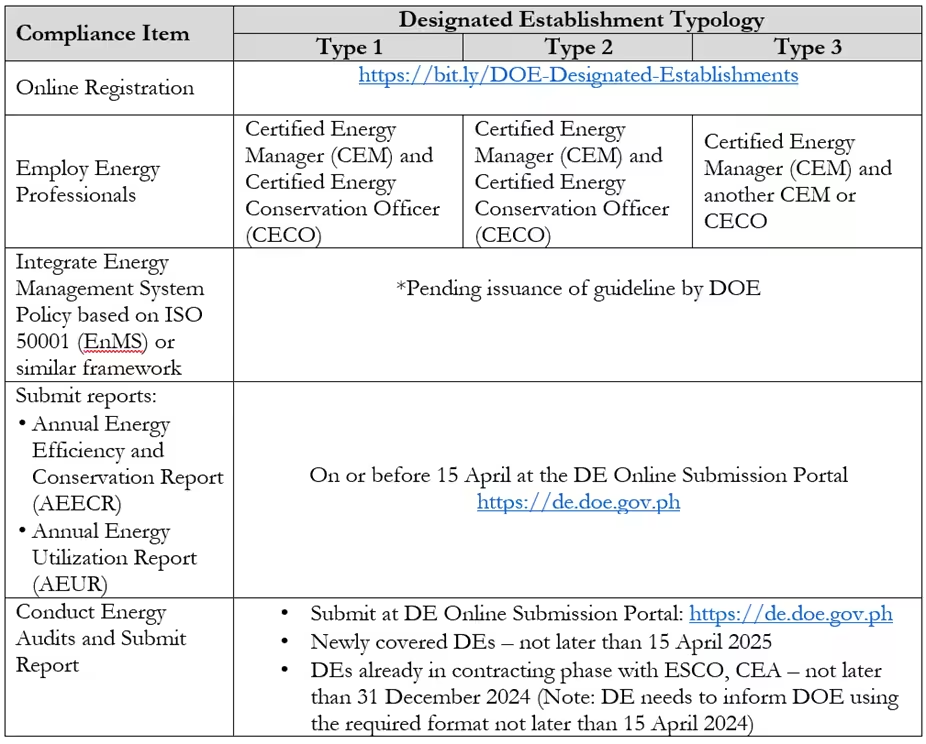
From this sample matrix, an evaluation checklist can developed, such as:
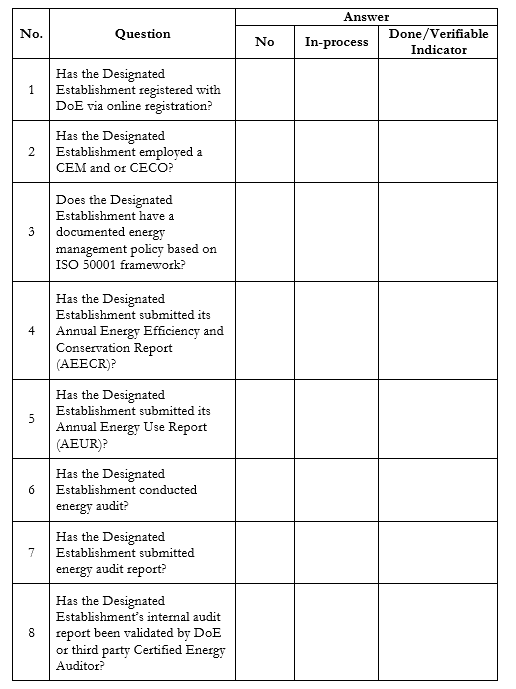
For “No” and “In-process” answers, corrective actions to fulfil the legal requirement need to be taken. A record on these need to be maintained. For “Done” answers, an Objectively Verifiable Indicator (OVI) needs to be indicated. For example, if the answer to Item 1 is “done”, an OVI can be a link to the registration or a screenshot showing that the DE has already been registered in the online portal.
It is the duty of the Energy Manager to know all the regulations related to energy management, not only RA 11285 but all other related issuances and ensure compliance. But other companies maintain a Compliance Department taking care of all the regulations that the company needs to comply, including energy-related. It is a good idea to review Module 1 (Codes, Standards and Regulations) when preparing to do evaluation of compliance to LORs.
From a management point-of-view, compliance to LORs is non-negotiable. There are serious implications to no-compliance to legal requirements. It can include fines and penalties, troubles dealing with regulators, negative effect on the company’s image and even disruptions in business operations.