5.1. Session Objectives
At the end of the session, participants are able to:
– recognize hazards related to materials handling and storage;
– describe the risk of being exposed to the materials handling hazards; and
– determine practical control measures to prevent injuries.
Requirements
Rule 1150 (OSHS). Materials Handling & Storage
– Use of Mechanical Equipment. Where mechanical handling equipment is used, sufficient safe clearance shall be allowed for aisles, at loading docks, through doorways and wherever turns or passage must be made.
– Aisles and passageways shall be kept clear and in good repair, with no obstruction across or in aisles that could create a hazard. Permanent aisles and passageways shall be appropriately marked.
– Secure Storage. Storage of material shall not create a hazard. Bag containers, bundles, etc., stored in tiers shall be stacked, blocked, interlocked and limited in height so that they are stable and secure against sliding or collapse.
– Clearance Limits. Clearance signs to warn of clearance limits shall be provided.
– Rolling Railroad Cars. Derail and/or bumper blocks shall be provided on spur railroad tracks where a rolling car could contact other cars being worked, enter a building, work or traffic area.
– Guarding. Covers and/or guardrails shall be provided to protect personnel from the hazards of open pits, tanks, vats, ditches, etc.
Materials handling plays an important role in almost all industries. The rapid rise of online shopping, has further fueled the demand for efficient and cost-effective material handling solutions.
This is a technique which includes the art of lifting, placing, storing or moving materials through the use of one’s physical strength or appropriate handling equipment.
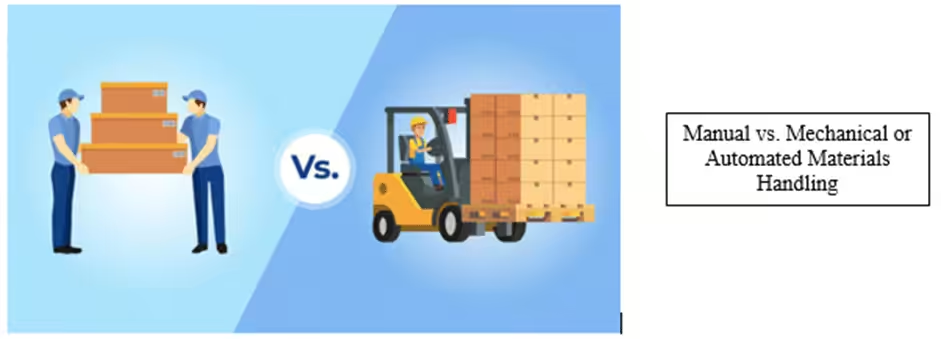
There are two different ways to handle materials in the workplace: manually, where workers physically lift and manipulate materials using their physical strength and mechanically, where special machines and lifting equipment are used to perform the task.
Both methods are effective, but there are important things that workers need to be aware of for both their safety and that of the materials they are handling (Engineered Ergonomics, 2019).