4.3.2 Manual Materials Handling
Manual Materials Handling consists of lifting, lowering, emptying, moving, carrying, transporting and packaging of products using physical strength. This method is highly susceptible to injuries and accidents. When doing these activities, a worker might:
– cut himself/herself,
– hurt his/her back, spine, muscles,
– hurt his/her fingers, hand, arm or legs, and
– sprain his/her ankle
Manual materials handling exposes workers to physical risks. The main risk factors associated with manual materials handling as identified by the National Institute for Safety and Health (NIOSH) are the following:
– awkward posture (bending and twisting),
– repetitive motion (frequent lifting, reaching, carrying),
– forceful exertions (carrying or lifting heavy loads),
– pressure points (grasping loads, leading against hard or sharp edges), and
– static postures (in a fixed and prolonged position).
Repeated or prolonged exposure to one or more of these risk factors initially results to fatigue and discomfort but over time may cause damages to muscles, tendons, ligaments, nerves and blood vessels or what is known as musculoskeletal disorders (MSDs).
Precautions in Manual Materials Handling
When moving materials manually, the following practices are recommended by OSHA to prevent injury among workers:
– Attach handles to loads to reduce the chances of getting fingers smashed
– Wear appropriate personal protective equipment
– Use proper lifting techniques
– Seek help when:
o a load is too bulky to properly grasp or lift,
o you can’t see around or over the load, and
o you can’t safely handle the load.
Personal Protective Equipment (PPE)
Using the following personal protective equipment prevents needless injuries when manually moving materials:
– hand and forearm protection (e.g. gloves for loads with sharp or rough edges);
– eye protection;
– steel-toed safety shoes or boots (to prevent impact on feet for objects that may fall);
– metal, fiber, or plastic metatarsal guards to protect the instep area from impact or compression.
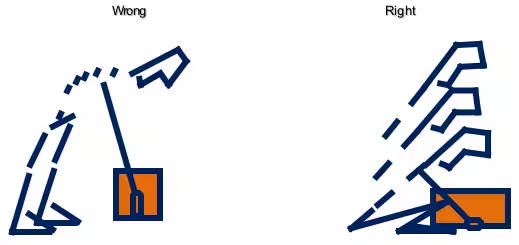
Proper Lifting Techniques
– stand in front of the load
– bend the knees
– using both hands, grasp the object firmly and pull close to your body
– lift with the legs — NOT THE BACK
– straight back and feet apart
Manual Lifting