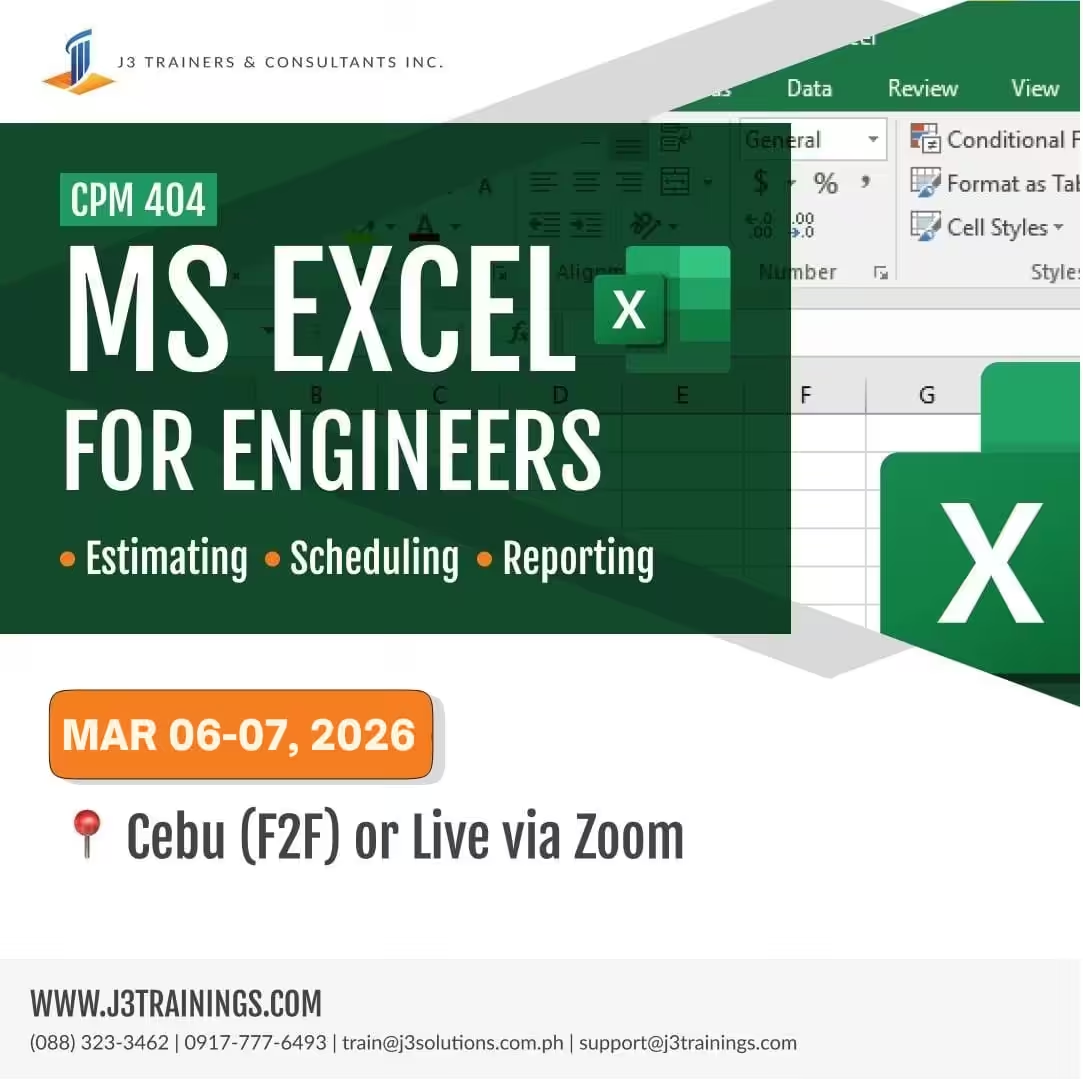
MS Excel for Engineers
(Tools for Estimating, Scheduling, and Reporting)
Practical MS Excel for Engineers is a beginner-level, hands-on training designed for engineers with limited experience in Excel. The course focuses on building essential Excel skills needed for everyday engineering tasks such as basic calculations, data organization, simple project tracking, and reporting. Participants will learn step-by-step using practical engineering examples, enabling them to work more efficiently, reduce manual errors, and produce clear, professional outputs for site and office use.
At the end of the course, participants will be able to:
- Navigate the Excel interface confidently and organize worksheets properly
- Use basic formulas and essential functions for engineering calculations
- Format worksheets clearly for technical and management reporting
- Sort, filter, and summarize engineering data accurately
- Create simple charts and visual reports
- Build basic Excel templates for daily engineering and project work
Course Duration: 2 days @ 8 hours per day
Course Outline
DAY 1 – Getting Comfortable with Excel (Foundations First)
Module 0: Introduction to MS Excel – History, Uses, and Benefits
- Brief history of Microsoft Excel
- Common uses of Excel in engineering
- Benefits of using Excel for engineers
Module 1: Getting to Know Excel (Very Basic)
- What Excel is (and what it is not)
- Workbook vs worksheet vs cell
- Rows, columns, ranges
- Mouse and keyboard basics
- Saving and organizing files
Module 2: Formatting Like an Engineer
- Number formats (number, percentage, currency)
- Alignment, borders, shading
- Adjusting row height and column width
- Freeze panes
- Page setup for printing
Module 3: Basic Excel Formulas
- What is a formula?
- Using +, −, ×, ÷
- Cell references (A1, B2)
- Copying formulas correctly
- Common beginner mistakes
Module 4: Essential Functions for Engineers
- SUM
- AVERAGE
- MIN / MAX
- COUNT / COUNTA
- Basic IF function
Module 5: Understanding Cell References
- Relative references
- Absolute references ($A$1)
- When and why to lock cells
- Practical engineering examples
Module 6: Sorting and Filtering Data
- Simple sorting (A–Z, Z–A)
- Using filters
- Clearing filters safely
DAY 2 – Using Excel for Engineering Work
Module 7: Working with Tables
- What Excel Tables are
- Why engineers should use Tables
- Auto-expanding formulas
- Simple table formatting
Module 8: Basic Charts for Engineers
- When to use line, bar, and column charts
- Creating charts step-by-step
- Editing titles, labels, and legends
- Common chart mistakes
Module 9: Simple Project Tracking in Excel
- Activity lists
- Start and end dates
- % complete
- Conditional formatting (basic status indicators)
Module 10: Basic Pivot Tables (Introduction)
- What pivot tables are (plain language)
- Creating a pivot table step-by-step
- Summarizing data by category
Module 11: Data Validation and Simple Controls
- Drop-down lists
- Preventing wrong data entry
- Simple warnings and checks
Module 12: Building a Simple Engineer’s Template
- Template layout principles
- Separating input, calculation, and output
- Basic cell protection
- Template best practices
Module 13: Practical Workshops (Capstone Exercises)
Purpose: To consolidate learning by applying Excel skills to realistic engineering tasks from start to finish.
Workshop 1: Quantity Take-Off (QTO) and Cost Estimate
Participants will:
- Create a simple quantity take-off table
- Apply basic formulas for volume and quantity calculations
- Apply unit costs and compute total cost
- Format the sheet as a basic cost estimate
Skills Reinforced: Formulas, cell references, formatting, basic functions
Workshop 2: Project Daily Report
Participants will:
- Create a daily report layout
- Compute total manpower using SUM
- Calculate % work completed
- Apply basic conditional formatting for status
Skills Reinforced: Functions, percentages, layout, data accuracy
Workshop 3: Simple Project Dashboard
Participants will:
- Link data from QTO and Daily Report sheets
- Display key project indicators (cost, progress, manpower)
- Create simple charts for visualization
- Arrange a clean, one-page dashboard
Skills Reinforced: Cell linking, charts, basic reporting, dashboard layout
References:
- Microsoft Excel Official Documentation (Microsoft Learn)
- Harvey, G. Excel 365 for Dummies. Wiley Publishing